
Work starts with intent
Most business tasks begin with a simple intention: understand what is waiting, find the exception or make a decision. The application often turns that intention into a journey across menus, filters, forms and reports. People learn where information lives before they can act on it.
Headless work changes that starting point. A person describes the outcome in natural language, and an AI assistant helps connect the request to the underlying business information and permitted actions. The conversation becomes a direct route into the application.
The application still matters. Its data, business rules, processes and access controls give the work its structure. What changes is how much navigation a person needs to do to reach a useful result.
A claim, through conversation
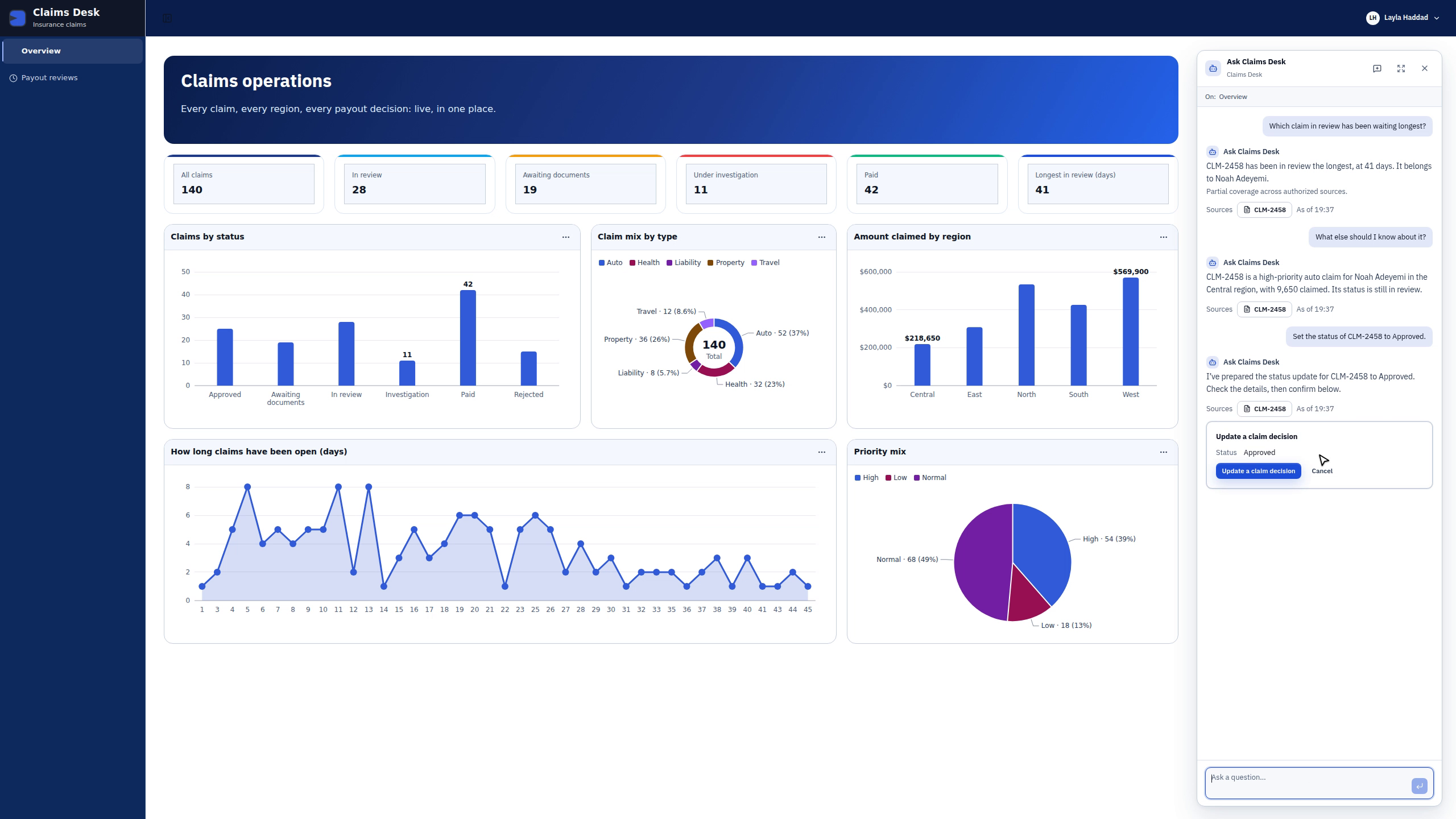
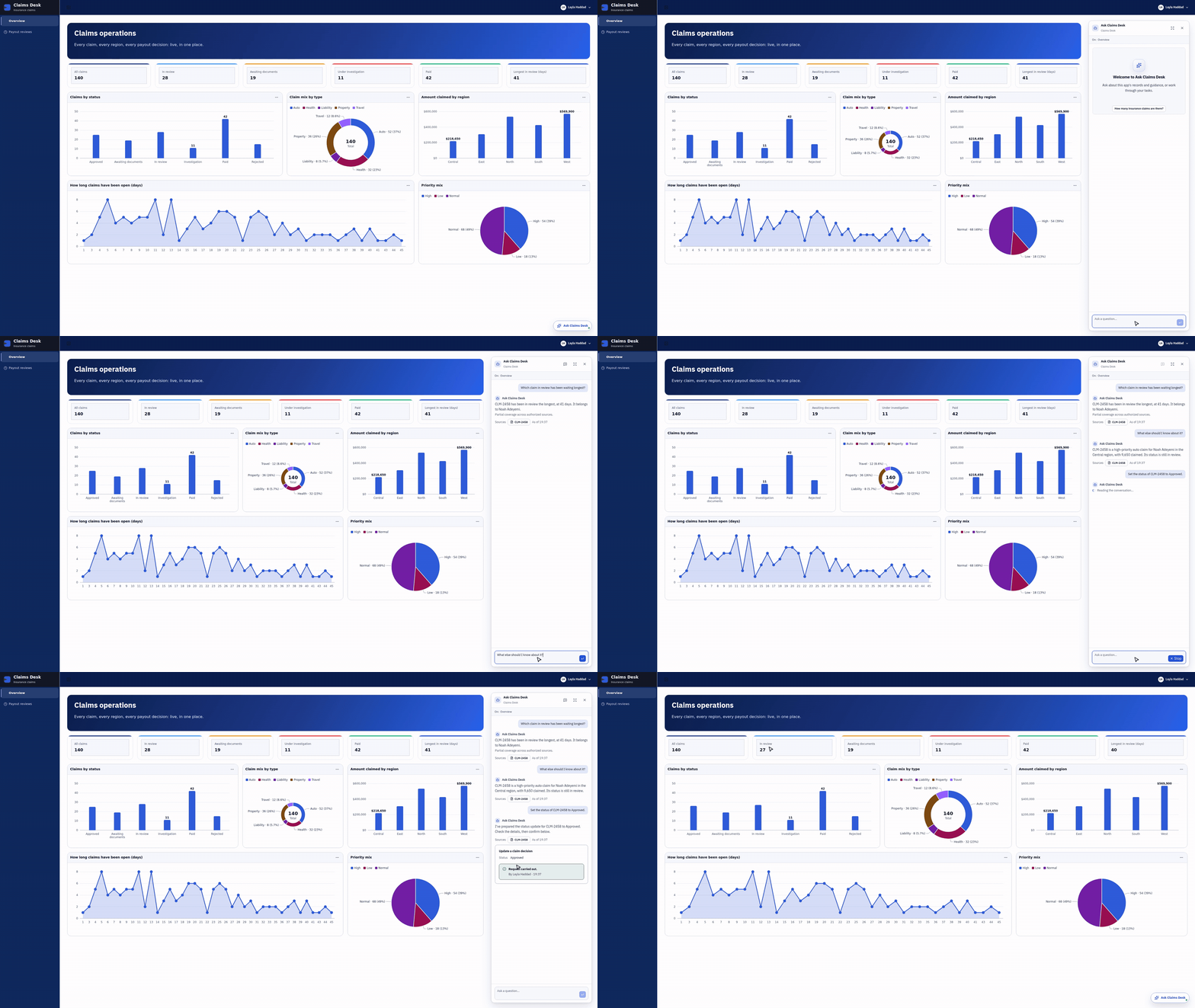
The recorded Claims Desk demonstration starts with a business question: which claim in review has been waiting longest? The assistant identifies CLM-2458 and cites the record. A follow-up brings its priority, type, region and claimed amount into the conversation. The first answer also makes partial coverage of authorized sources explicit.
The person asks to set that claim’s status to Approved. The application presents one review card showing the proposed status. Only after explicit confirmation does it show a receipt: “Request carried out.” Reloading the dashboard then changes the In review count from 28 to 27.
This is a configured development demonstration with fictional claims. It shows a question, relevant context, a proposed change, human confirmation and a visible result. The GIF shortens model waits and idle time; available actions in another application depend on its configuration and permissions.
Less time navigating. More time deciding.
From useful answers to useful work
An answer becomes more valuable when it connects to the next step. “Which requests need my attention?” should lead to the relevant records. “Prepare this decision” should make the intended change clear. “Confirm” should lead to an understandable outcome, including any exception that still needs attention.
This is where agentic automation meets the operating reality of an enterprise. AI helps interpret the request and prepare the work. Business processes, decision rules and connected systems determine how the work can proceed. People retain the judgment required at the decision points designed for them.
Ask Inflow and the connected agent
Ask Inflow brings conversational assistance into the Inflow experience. It gives people a place to express intent while staying close to their application and its context. For teams exploring AI-led application creation, the same principle applies: describe the need, examine the proposed structure and refine it with the people who understand the business.
MCP provides a defined connection between an AI agent and the tools a configured server exposes. Tool discovery and structured requests can make application capabilities accessible to an agent. Which operations are available, and who can use them, depend on the server configuration and the application’s authority model.
Together, conversational assistance and connected tools point toward an enterprise in which people can ask for work to be done and review the result in context. Each journey still needs a clear scope, a responsible owner and a design that handles failure as thoughtfully as success.
Make human judgment easier to exercise
Good AI-assisted work makes the proposed change easy to understand. Show the records involved, the action requested and the consequence of confirmation. Respect the person’s access, make exceptions explicit and keep consequential decisions at the review points defined for the process.
Sovereign AI adds a further design question: where should the information and models operate? Teams should decide what data an agent may use, which model connections are acceptable and what hosting boundaries the organisation requires. These choices belong in the solution architecture from the beginning.
Begin with one meaningful journey
Choose a task people repeat: reviewing leave, preparing a service response, understanding an exception or assembling a case for approval. Map the information, tools, permissions and human decisions it needs. Then design the conversation around a clear outcome and evaluate the complete journey.
Modern digital transformation can be felt in the working day: less time finding the right screen, more time understanding what matters and making a considered decision. With Inflow, that is the conversation to start.