Business record types
Describe the entities a solution works with. The retained model includes Employee, Assignment, Department and Access request record types.

Build
Model the records, fields and relationships behind business work. Connect that context to applications, agent preparation and decisions, with source access and information boundaries defined for the solution.
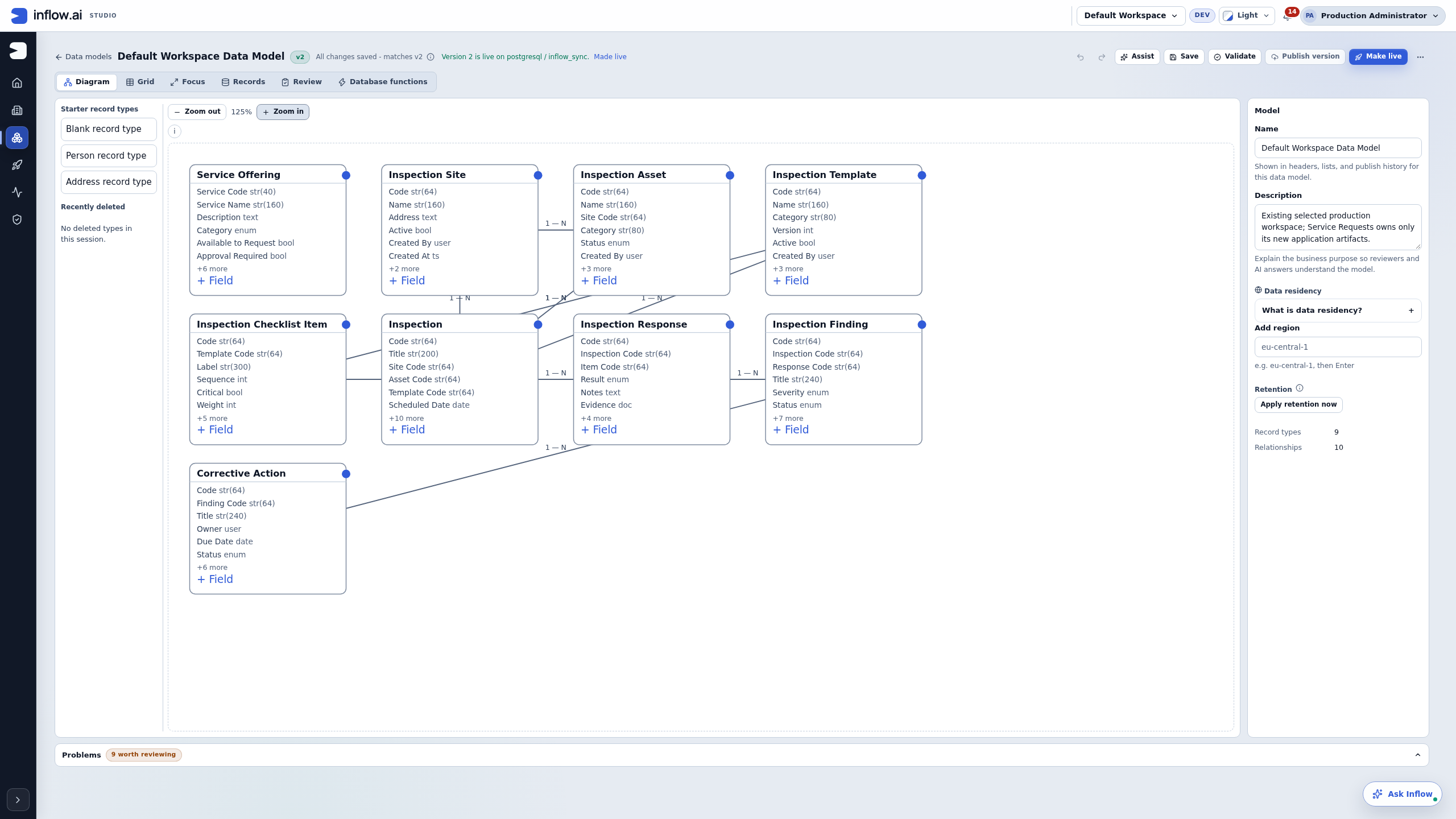
Describe the entities a solution works with. The retained model includes Employee, Assignment, Department and Access request record types.
Represent the details needed by a business task. The retained diagram displays named fields with identifiers, strings and dates.
Connect related business information in a shared model. The retained diagram makes one-to-many relationships visible between its record types.
Make records meaningful across the solution. Applications, decision logic and agent preparation can refer to a common business context.
Bring data-source connectivity into the wider solution design. Agree mappings, access and information boundaries for the actual sources involved.
Give record and relationship design an explicit review stage. Historical controls include Diagram, Grid, Focus, Records and Review alongside validation and version publication.
Discuss the objects, responsibilities and boundaries that make this capability useful in your environment.
Who may read or change each record
The authoritative source for each business fact
How sources, relationships and access boundaries fit together
Illustrative solution scenarios to shape a useful demonstration.
Connect employee, assignment, department and access-request information.
Relate a service request to its applicant and supporting records.
Assemble policy and claim context for an authorized review.
Inside the product
Inspect native application and builder views, with full-size previews and the context behind each capture.
Existing native schema with record types and relationships. This is a model-design view.
Bring your business journey, AI environment and integration needs. Let’s explore the right starting point.
Request a demo